
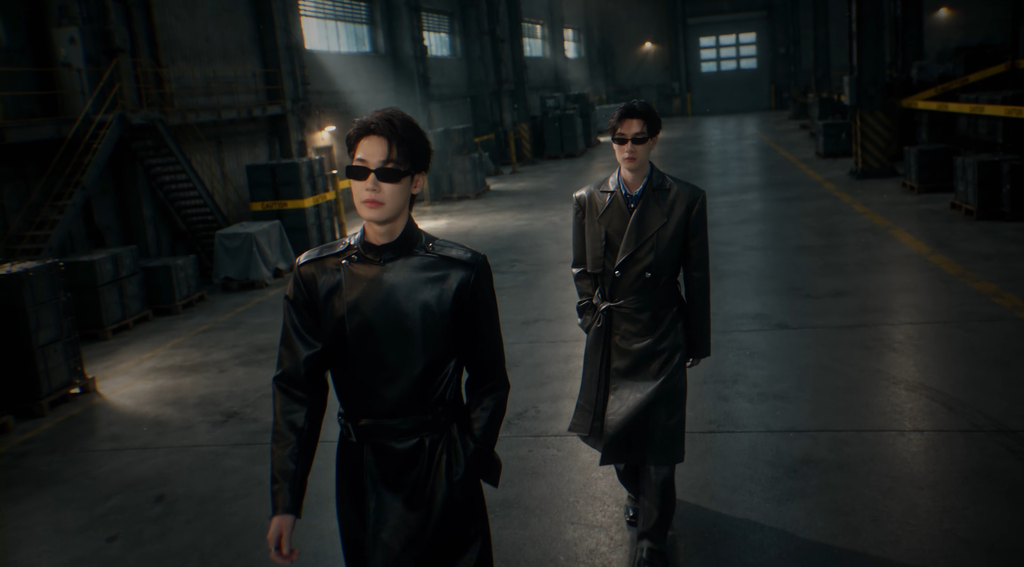
It has caught my attention since last year that generative Al has begun to be used in dramas. At first, it was the ending credits of That Summer, then it was the crowd scenes in Bittersweet Love, and now I’m seeing it used for posters hung in the background of scenes, or for merch designs like in Oops! Mysterious Sounds. The recent promotion for GMMTV fancons like that for Dew-Tee’s fancon seem to have also used it instead of CGI. Is this a problem? Are people right to boycott series like Nour that use generative Al or is it an undeniable new aspect of the entertainment industry that we all just have to get used to?
Most people are aware of the negatives of generative Al. It’s a cheap, lazy alternative to CGI. It takes jobs from real creatives, steals art from artists and photos of real people without their consent. So why do so many people still watch dramas that use generative Al even with the knowledge that it is at the detriment of real people’s jobs?
The reality is, when a lot of people just want to watch a series to relax after work or studying, they perhaps aren’t quite so bothered by the use of Al in a drama. Does that make them morally a bad person? Not necessarily, perhaps their priorities are not quite the same. Perhaps they believe that their opinion on Al will have no effect on the company making the drama, so there is no point in protesting against it. Which raises the question, do fans’ opinions on generative Al affect companies at all?
Although there are no direct examples of entertainment companies being directly affected by fans opinions on generative Al, we know that fans have a very strong influence on the companies of the media they watch. Companies rely on fans because of their influence. Fans provide money through views, merch, and from spreading the word on social media platforms. Therefore, a boycott of dramas that use Al could be very effective. However, fans are not the only influence. Brand sponsors are also highly influential in the Thai media space. If brand sponsors are unbothered by the use of generative Al in the dramas that they sponsor, then entertainment companies will have no incentive to not use it.
I wonder if Al has been introduced in a very careful way, especially by large companies like GMMTV. Perhaps if they had used it straight away in a drama, there would have been strong backlash from fans. But because they have introduced it slowly, first in the ending credits of a series, there wasn’t much to complain about because realistically, who is even watching the ending credits of a drama? Who cares enough to complain about something that barely anyone watches? And so, because no-one complained about the ending credits having generative Al, they started to use it in the opening credits. And now it’s being used for trailers for fancons. Will we soon see generative Al used in episodes of GMMTV series? And will fans care enough to boycott them? Perhaps, perhaps not. It remains to be seen.
I do find it very ironic that GMMTV has the audacity to be using generative AI, when the series Burnout Syndrome was entirely centred around the harms of generative AI, and how it takes away jobs from software developers and artists. Seems rather hypocritical, no?
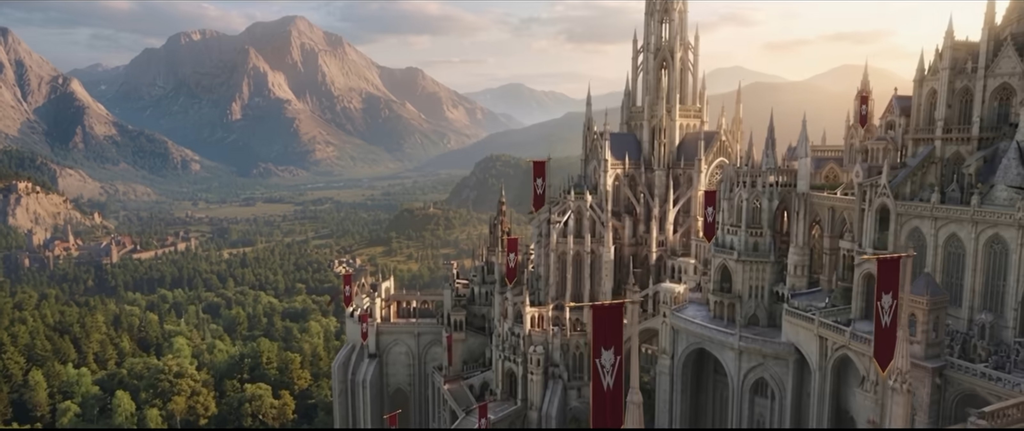
It might be the case that fans do care about AI use, but they care more about watching their favourites. When pairings only have one or two series a year, and that series includes generative Al, will fans have the willpower to put their morals above a series? It’s likely that they won’t. When the series Golden Blood aired in 2024, many fans wanted to boycott the show because of the news about Joss Wayar’s conservative views, as he had followed figures like Andrew Tate and Donald Trump on social media. Unfortunately, a lot of fans ended up watching the drama anyway, to support his co-star Gawin, as Gawin had a pretty strong fanbase from previous projects. Therefore, in this case, fans’ outrage did virtually nothing because there was still a lot of support for the drama (although there was criticism about other aspects of the drama like the CGI) and Joss has continued to be successful in other dramas under GMMTV.
This is very different to the case of Justin Moir, who was very quickly dropped by GMMTV when it came to light that he had been engaging with red-pill content online. The outcome of Justin’s case shows that there is no one-size-fits-all response when it comes to GMMTV, or any other entertainment company, and therefore any boycott of actors or series can have different impact depending on the popularity of the idol in question. Justin Moir was a young, up-and-coming actor who had only had a supporting role in one series, which had not even finished airing when he was dropped. He had no real fanbase, unlike Joss.
But Justin’s case also shows that fans can have a real impact when the loss of fans will be detrimental enough to mean a monetary loss for a company. Because that’s what it boils down to at the end of the day. Is this actor going to make the company money or lose them money? And in the case of AI: Is generative AI going to save companies costs by not hiring actual artists, or will they lose money from no-one watching these series because of the AI?
Unfortunately, I fear it will be the former, not the latter.
Leave a Reply